


Straight hair and a burst fade make one of the cleanest combinations in modern barbering. The smooth, flat texture of straight hair shows off every curve of the fade, so the “burst” around the ear reads as crisp and intentional rather than blurry or uneven. This is why the style shows up so often in barbershops right now, from office-ready cuts to bold statement looks.
This guide breaks down what a burst fade actually is, how the low, mid, and high versions differ, and fifteen specific ways to wear a burst fade with straight hair. You will also find styling steps, a realistic maintenance schedule, and the exact language to use with your barber so the cut turns out the way you picture it.
What Is a Burst Fade for Straight Hair
A burst fade is a fade haircut that curves around the ear instead of running straight down the side of the head. Picture a half circle, or a sunburst, tracing the edge of the ear before blending into the neckline. That curved path is what separates a burst fade from a standard fade, which usually keeps a straighter, more vertical line down the sideburn.
On straight hair, this shape stands out more than it would on curly or coily textures. Straight strands lie flat against the scalp, so there is nothing to soften the transition between the shaved sides and the longer top. The result is a sharper, more graphic outline around the ear, with a clear line between the fade and the hair above it.
Barbers often pair this cut with straight hair because the texture behaves predictably under clippers. It does not spring back or shrink the way curly hair does, so the fade line stays visible from every angle, and the top section can be brushed forward, side swept, or left textured without losing shape.
A few traits define the look on straight hair:
- A rounded, arc-shaped fade line that hugs the ear
- A clean back section, often left horizontal instead of dropping low
- A defined edge or hairline that frames the forehead and temple
- A top length that ranges from a short buzz to long, flowing layers
Because straight hair holds a shape without much extra texture work, this cut suits men who want a low-effort finish and men who want a heavily styled top. Both approaches work as long as the fade itself is blended cleanly.
Low vs Mid vs High Burst Fade on Straight Hair
The height at which the fade starts changes the whole personality of the haircut. Low, mid, and high burst fades all use the same curved technique around the ear, but the starting point shifts how bold or subtle the contrast looks.
Low burst fade straight hair begins just above the ear, close to the hairline. Because the fade starts low, most of the head keeps its natural length, and the contrast between the top and the sides stays gentle. This version suits workplaces with a conservative dress code, first-time fade wearers, and anyone who prefers a barely-there transition rather than a dramatic one.
Mid burst fade straight hair starts around temple level, roughly halfway up the side of the head. This is the most requested height because it balances visible contrast with everyday practicality. It works with almost any top length, from a short crop to a longer flow, which makes it the safest starting point if you are unsure which fade height to ask for.
High burst fade straight hair starts near the parietal ridge, the highest point on the side of the head before it curves toward the crown. This produces the most dramatic contrast between the shaved sides and the top, and it draws the most attention to the burst shape itself. High burst fades pair especially well with bold top styles like a mohawk, a heavy quiff, or a sharply styled brush up, since the strong fade needs a top style with enough presence to match it.
| Fade Height | Starting Point | Contrast Level | Best For |
|---|---|---|---|
| Low | Just above the ear | Subtle | Office settings, first fades, low maintenance |
| Mid | Temple level | Balanced | Most face shapes, versatile top styles |
| High | Parietal ridge | Bold | Statement looks, longer or textured tops |
Face shape plays a role too. Round faces often benefit from a high or mid fade, since the added height creates a longer visual line. Square and oval faces tend to handle all three heights well, which gives more freedom to choose based on maintenance preference rather than face shape alone.
15 Burst Fade Straight Hair Styles
These fifteen variations cover short, medium, and long top lengths, so there is a version here for nearly every lifestyle and grooming routine. Each style uses the same core burst fade technique around the ear, with the top length and finish changed to create a different overall look.
Read more: Blowout Low Taper Fade Curly Hair: 2026 Barber Guide For Curls
1. Low Burst Fade Straight Hair with Textured Crop
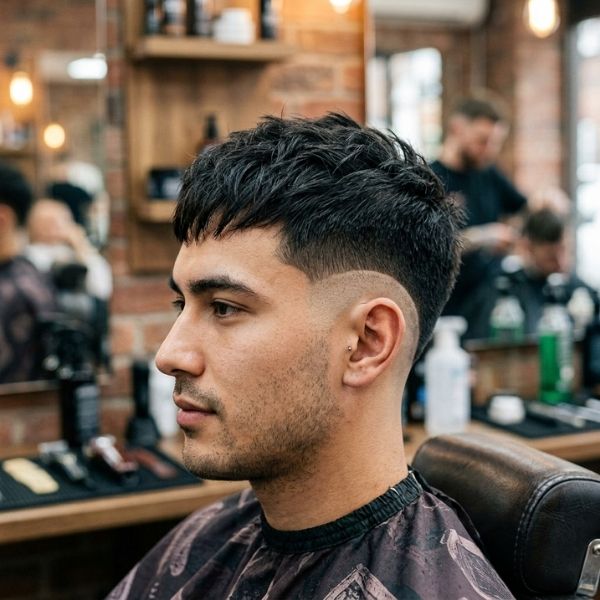
The textured crop keeps the top short, usually one to two inches, and cut with scissors over comb to add movement without bulk. Paired with a low burst fade, the sides stay subtle while the top gets light texture through a matte paste. This combination is one of the easiest to maintain since there is minimal daily styling involved.
2. Mid Burst Fade Straight Hair with Textured Fringe

A textured fringe brings the top hair forward over the forehead in soft, piece-y sections. The mid fade adds just enough contrast to frame the fringe without overpowering it. A light texture spray or clay works best here, since heavier products can weigh straight hair down and flatten the fringe.
3. High Burst Fade Straight Hair with Messy Top
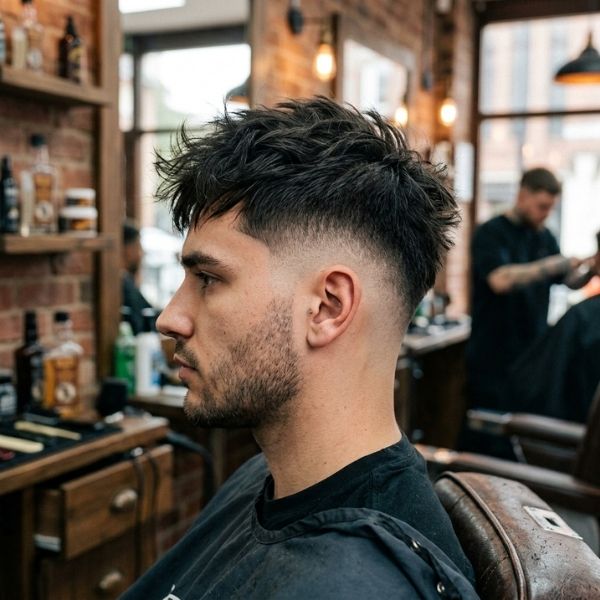
This version pairs the boldest fade height with a deliberately undone top, styled with fingers rather than a comb for a lived-in finish. The high contrast around the ear keeps the cut looking sharp even though the top is intentionally messy. A matte clay applied to damp hair gives the best separation between strands.
4. Low Burst Fade Straight Hair Short Buzz Top
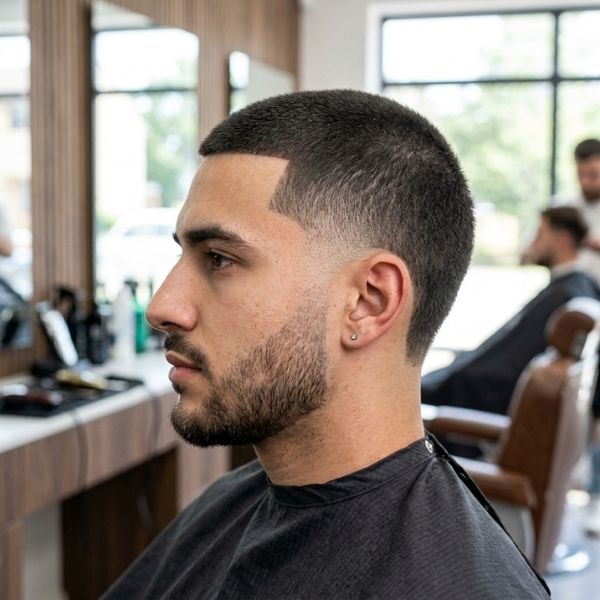
For the lowest maintenance option on this list, a short buzzed top pairs with a low fade for a clean, uniform look. There is virtually no daily styling required, which makes this a strong choice for gym routines, humid climates, or anyone who wants a fresh cut that holds its shape between barber visits.
5. Mid Burst Fade Straight Hair Short Spiky Texture

Short spikes work well with straight hair because the strands hold an upright position once a strong-hold pomade or wax is applied. The mid fade gives the spikes a defined base to work from, so the style reads as sharp rather than chaotic. This look suits younger, more casual settings.
6. High Burst Fade Straight Hair Short Brush Up

A brush up pushes the top hair straight upward using a round brush and blow dryer, then locks it in place with a strong-hold cream. Combined with a high burst fade, this creates a taller silhouette that adds visual height, which flatters rounder face shapes especially well.
7. Mid Burst Fade Straight Hair Side Sweep
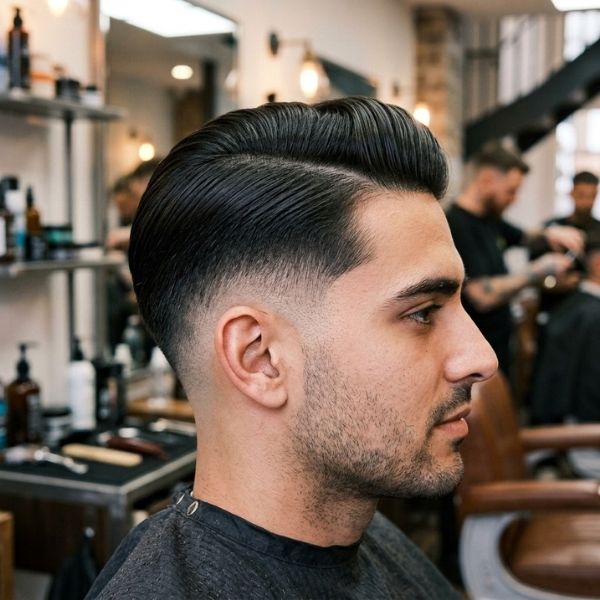
The side sweep directs the top hair to one side using a comb and a light-hold pomade for shine and control. A mid fade complements this classic movement without competing for attention, making it a dependable option for business casual and formal settings alike.
8. Low Burst Fade Straight Hair Side Part
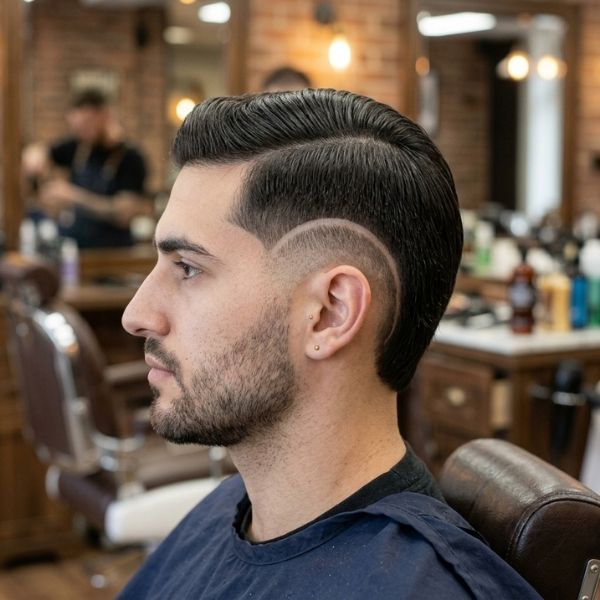
A defined side part, cut in by the barber for a crisp line, pairs naturally with a low burst fade for a polished, traditional look. This is one of the more formal styles on the list and works well for interviews, weddings, or professional headshots.
9. Mid Burst Fade Straight Hair Slick Back
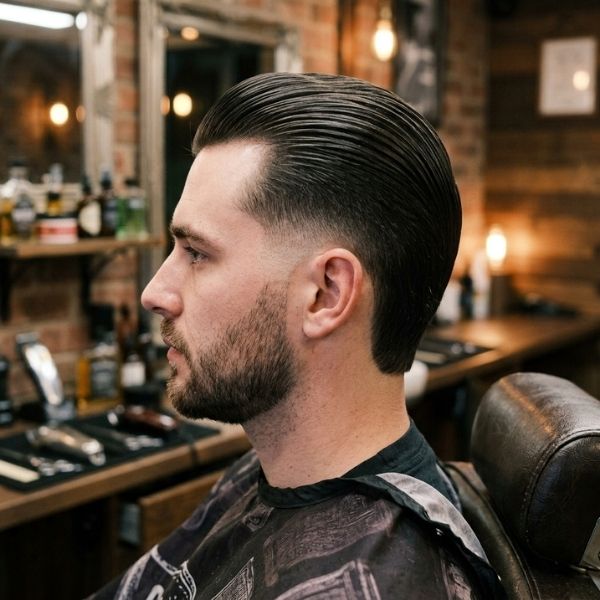
The slick back pulls all the top hair backward using a comb and pomade with strong shine, creating a sleek, structured finish. A mid fade adds enough edge to keep the style from looking too formal, striking a balance between polished and modern.
10. High Burst Fade Straight Hair Quiff

The quiff lifts the front section of hair upward and slightly forward, creating volume at the hairline. A high burst fade gives this style extra drama, since the tall front section and the dramatic side contrast work together rather than against each other. Expect to use a blow dryer and volumizing product to build the base before applying hold.
Read more: Low Taper Fade Black Male: 2026 Barber Guide for Waves, Curls, Afros & Locs
11. Long Burst Fade Straight Hair Layered Top

For men growing their hair out, layers add movement and prevent the top from looking heavy or flat. A burst fade underneath keeps the cut from looking shapeless as it grows, since the sides stay tapered even while the top length increases. This works well as a transitional style between short and long hair.
12. Long Burst Fade Straight Hair Flow Back

The flow back lets longer top hair fall naturally backward, either air dried or lightly blow dried for extra lift at the root. The burst fade underneath provides structure, so the longer top does not overwhelm the overall shape. A light sea salt spray adds texture without stiffness.
13. Long Burst Fade Straight Hair Curtains

Curtains part the top hair down the middle and let both sides fall forward and away from the face. This retro-inspired look pairs surprisingly well with a burst fade, since the tapered sides keep the style from looking overgrown. A light cream helps train the part without adding shine.
14. Mid Burst Fade Straight Hair with Mullet
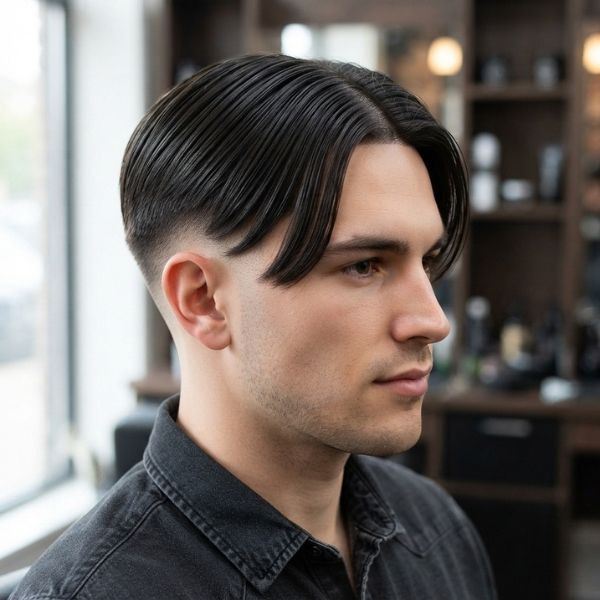
The mullet keeps length at the back while the sides stay tapered into a mid burst fade. On straight hair, the back sits flat rather than curling out, which gives the mullet a cleaner, more modern shape than it had in earlier decades. Regular trims at the nape keep the shape controlled as it grows.
15. High Burst Fade Straight Hair with Mohawk

The boldest style on this list, the mohawk leaves a strip of longer hair down the center of the head while a high burst fade clears the sides completely. This works best for special occasions or for men who want a statement look, since it requires the most daily styling to maintain the raised center section.
What to Tell Your Barber
Clear communication is the difference between getting the exact cut pictured above and walking out with something close but not quite right. Bring a reference photo whenever possible, since fade height and top length are easy to misjudge from a verbal description alone.
Use these specific phrases during your consultation:
- State the fade height first: “I want a low, mid, or high burst fade.”
- Describe the ear detail: “I want the fade to curve around my ear, not go straight down.”
- Give a top length in inches or clipper guard size, rather than a vague word like “short.”
- Mention your hair type: “My hair is straight, so please keep enough length on top to avoid a flat look.”
- Ask about the back: “Keep the back line horizontal rather than dropping it low behind the neck.”
If you are choosing one of the fifteen styles above, name it directly and show the barber the top length and finish you want, since the term “burst fade” alone only describes the sides, not the top section.
How to Style Straight Hair So the Burst Fade Pops
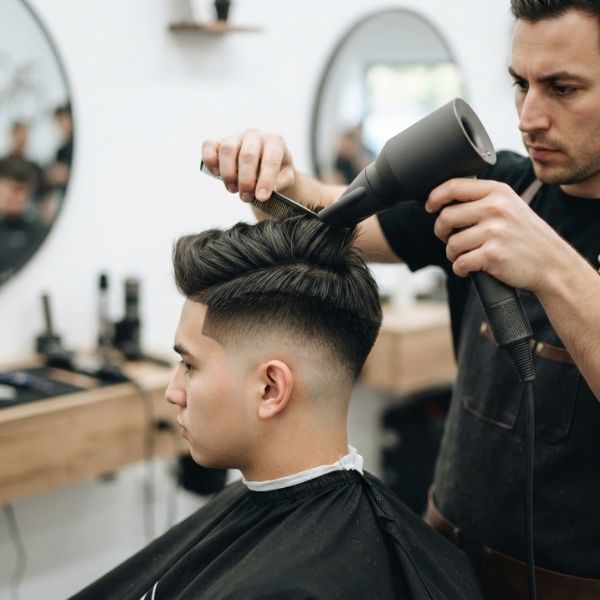
Straight hair needs a bit of help to avoid looking flat once it grows past a buzz cut length. A few consistent habits keep the top section looking full and keep the fade line looking sharp between trims.
- Start with towel-dried, not soaking wet, hair before applying any product.
- Use a small amount of texture powder or matte clay at the root to add lift, especially for shorter styles.
- For height-based styles like a quiff or brush up, blow dry the top upward with a round brush before applying hold.
- Apply pomade or gel from mid-length to ends for slicked or side-swept looks, working it through with a comb.
- Brush or comb along the fade line gently to keep shorter hairs from standing up and blurring the transition.
- Finish with a light-hold hairspray on longer styles to prevent the shape from collapsing throughout the day.
Product choice matters as much as technique. Matte clays and powders suit shorter, textured tops, while pomades and creams with shine work better for slicked, side-part, and comb-over styles. Straight hair tends to look better with slightly heavier products than wavy or curly hair, since there is less natural texture to grip onto.
Maintenance Schedule
A burst fade grows out faster than most other haircuts because the shortest sections sit right at the hairline and around the ear, where regrowth is most noticeable. Sticking to a consistent trim schedule keeps the line sharp instead of letting it blur into a regular taper.
- Low burst fade: every four to five weeks
- Mid burst fade: every three to four weeks
- High burst fade: every two to three weeks
- Longer top styles (mullet, layered, flow back): trim the top every six to eight weeks, but keep the sides on the shorter schedule above
Between visits, a beard and hair trimmer with a skin-safe blade can clean up neckline and sideburn regrowth without disturbing the main fade line. Washing with a gentle, sulfate-free shampoo two to three times a week helps prevent the scalp irritation that can come from frequent clipper work close to the skin.
Read more: Low Fade Mullet Guide: Styles, Mid and High Options
Common Mistakes and Quick Fixes
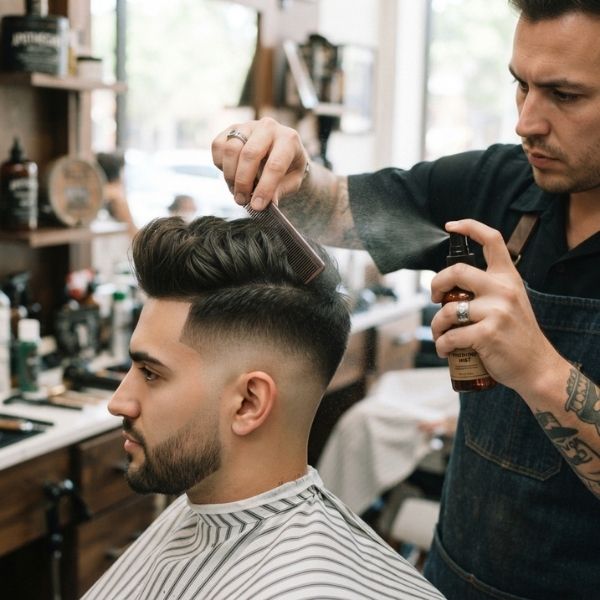
Even a well-cut burst fade can look off if a few small details are missed at home. These are the issues that come up most often, along with simple ways to correct them.
- Flat top section. Straight hair has no natural lift, so skipping a root-boosting product leaves the top looking pressed down. Fix this with a light mousse or powder applied before styling.
- Blurry fade line. Waiting too long between trims lets the shortest section grow out and blend into the longer hair above it. Book the next trim before the current one fully grows out, not after.
- Heavy, greasy finish. Using too much pomade or cream on straight hair can weigh it down and create shine that looks unintentional. Start with a small amount and add more only if needed.
- Uneven ear curve. A rushed cut can leave the burst shape looking jagged rather than rounded. This is a barber skill issue, so ask specifically for the fade to be “cleaned up around the ear” at your next visit if this happens.
- Dry, brittle ends on longer styles. Long burst fade styles need regular conditioning, since exposed ends on straight hair can look dull or frizzy without moisture. A leave-in conditioner used once or twice a week helps keep length looking healthy.
Frequently Asked Questions
Does a burst fade work well on straight hair?
Yes, straight hair actually shows off the burst fade’s curved shape more clearly than wavy or curly textures, since there is nothing to blur the transition line.
How often should I get my burst fade trimmed?
Low fades need a trim every four to five weeks, mid fades every three to four weeks, and high fades every two to three weeks to keep the line sharp.
What top length works best with a burst fade on straight hair?
Any length works, from a short buzz to long layered styles, as long as enough length is left to avoid a flat, pressed-down look.
Can I style a burst fade without heat tools?
Yes, shorter styles like a textured crop or buzz top only need a small amount of clay or paste, applied to damp or dry hair with fingers.
Is a burst fade high maintenance?
The higher the fade starts, the more often it needs a trim, so a low burst fade is the lowest maintenance option and a high burst fade needs the most frequent visits.
Conclusion
A burst fade turns straight hair into a sharp, structured canvas, whether the top is buzzed short, swept to one side, or grown out into a mullet or curtains. The key to getting it right comes down to three things: choosing a fade height that matches your comfort with contrast, communicating clearly with your barber about the top length and ear curve, and sticking to a trim schedule that keeps the line clean. With fifteen styles to choose from, there is a version of this cut suited to almost any face shape, hair length preference, and daily styling routine.

Zaria Rhodes is the lead editor and content curator at Lyrinexa, passionate about music, storytelling, and lyrical expression. With a deep love for discovering the meaning behind songs, she brings clarity, creativity, and accuracy to every post. Zaria is dedicated to providing readers with authentic lyrics, thoughtful interpretations, and a seamless music-exploration experience.

1 thought on “Burst Fade Straight Hair: 15 Trendy Styles That Look Sharp”