


If you want one haircut that looks polished on a Monday morning and still holds its shape by Friday night, the mid fade crew cut hairstyle earns that spot. It sits at the intersection of tidy and modern, short enough to need almost no daily styling, structured enough to look intentional in every photo.
This guide breaks down what the cut actually is, who it flatters, the details that separate an average version from a great one, and 12 variations you can bring straight to your barber. You’ll also get a simple barber script, quick styling steps, and a maintenance plan so the cut keeps its shape between visits.
What Is a Mid Fade Crew Cut Hairstyle?

A crew cut keeps the top short and fairly uniform, usually between half an inch and one and a half inches, tapering gradually from the front hairline toward the crown. The mid fade handles the sides and back: hair blends from a slightly longer length near the temple down to a very short length near the ears, with the fade line starting roughly midway between the top of the ear and the hairline.
That placement is what makes it “mid.” A low fade starts closer to the ears and looks more conservative. A high fade starts near the temple and creates a sharper, more dramatic contrast. The mid fade sits in the middle, giving you visible contrast without the boldness of a high skin fade. It’s the setting most barbers recommend when a client says “something clean but not too much.”
Because the top stays short, this cut works with almost no product and no morning routine beyond a comb or fingers through damp hair.
Who It Suits
The mid fade crew cut hairstyle works for students, professionals, athletes, and anyone who wants a groomed look without a lengthy styling process. It reads as neat in an office, relaxed at the gym, and sharp for a night out, which is part of why it stays popular across age groups.
It’s also a strong option for men who are starting to notice a receding hairline or thinning crown, since the short top and blended sides reduce the visual gap between hair densities.
Read More : Straight Hair Mullet Men: Best Styles, Haircut Guide, Styling & Maintenance
Face Shapes and Hair Types

Most face shapes handle a mid fade crew cut well because the cut doesn’t add width or length the way longer styles do. A few adjustments help fine-tune the fit:
- Round faces: Keep slightly more length on top and a defined line up to add vertical structure.
- Square faces: A classic crew cut with soft edges balances a strong jawline without adding harshness.
- Long or oval faces: A textured top with a bit of volume prevents the face from looking stretched.
- Heart-shaped faces: A side part or Ivy League-style top draws attention away from a narrower chin.
On hair type, straight and wavy hair fade the cleanest and require the least effort to style. Curly and coily hair also work well and often look fuller on top, though the fade itself needs slightly more frequent trims since curl shrinkage can hide regrowth at the sides.
Edges and Details
The details around the hairline are what separate a sharp mid fade crew cut from a rushed one:
- Line up: A crisp edge at the forehead and temples that adds definition and photographs well.
- Nape shape: A rounded or tapered nape keeps the back looking natural, while a squared or V-shaped nape reads as more deliberate and structured.
- Blend quality: The transition between the top length and the fade should have no visible lines or steps. Ask your barber to double-check the blend under bright light before you leave the chair.
- Sideburns: Kept short and even with the fade so they don’t compete visually with the line up.
12 Variations of Mid Fade Crew Cut Hairstyle
Every version below uses the same foundation, short uniform top and a fade starting mid-head, with small changes to texture, part, or finishing details.
Classic Mid Fade Crew Cut

The original version: even length on top, a clean mid fade on the sides, and no added texture or part. It’s the easiest to maintain and the safest option if you’re trying the style for the first time.
Textured Mid Fade Crew Cut Hairstyles

The top is cut with scissor-over-comb texturizing so individual pieces stand up slightly. A small amount of matte paste adds separation without shine, giving the cut more visual interest than the classic version.
Messy Mid Fade Crew Cut
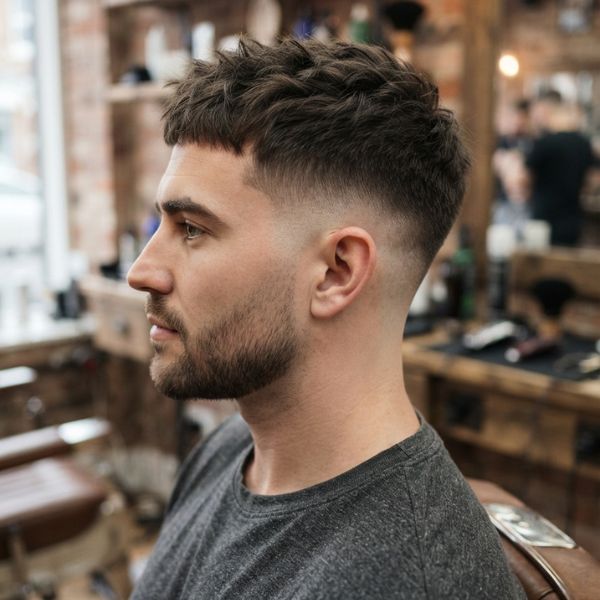
A looser, tousled finish on top with the mid fade underneath keeping everything grounded. Great for a casual, off-duty look that still reads as intentional rather than unkempt.
Skin Mid Fade Crew Cut Hairstyle

The fade drops all the way to skin at its lowest point instead of stopping at a short guard length. This version has the most contrast and works especially well with dark hair against lighter skin tones.
Mid Fade Crew Cut with Line Up
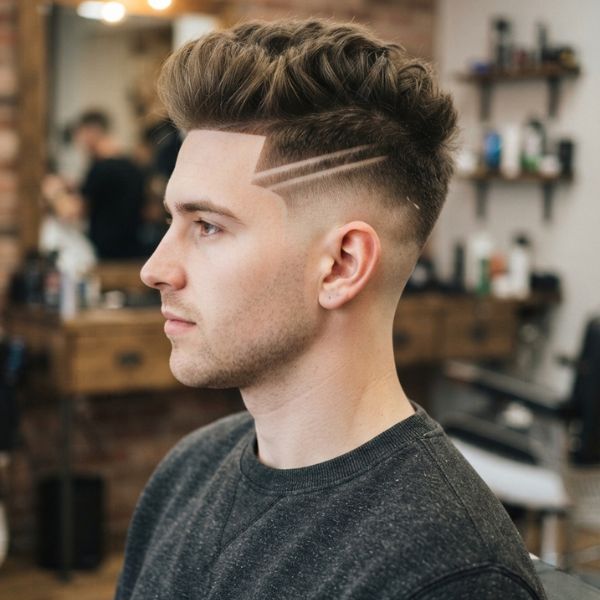
A sharp, razor-defined line at the forehead and temples paired with the standard crew cut top. This variation stands out most in photos and video, so it’s popular for men who post their look or work in front of a camera.
Mid Fade Crew Cut with Hard Part

A shaved line marks a side part, directing the top to one side with almost no daily effort. The mid fade removes bulk at the temple so the part line stays visible and crisp for days.
Ivy League Mid Fade
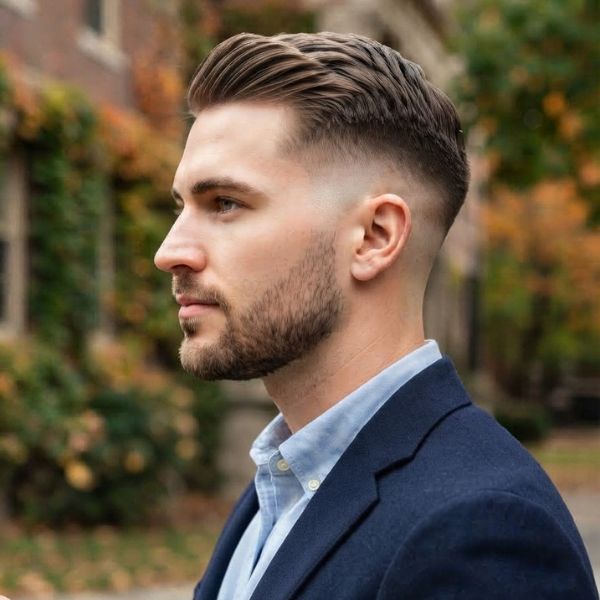
The top is left slightly longer, around two to three inches, so it can be side-swept or combed back, while the sides keep a tight mid fade. This is a strong choice for offices that want tidy hair with a bit more personality than the classic crew cut.
Curly Mid Fade Crew Cut

Natural curl pattern is preserved on top while the mid fade keeps the sides controlled. This version needs a bit more product, usually a light curl cream, to define the pattern without weighing it down.
Wavy Mid Fade Crew Cut

Natural waves on top get a slight lift from a sea salt or texturizing spray, while the mid fade narrows the sides for a balanced silhouette. It holds shape well between washes.
Straight Hair Mid Fade Crew Cut

Straight hair takes the cleanest fade line and the sharpest crew cut top of any texture. This version needs the least product and styles fastest, often in under a minute.
Mid Fade Crew Cut with Beard

The fade on the sides is blended down into a full or trimmed beard, creating one continuous line from hairline to jaw. Ask your barber to fade the beard’s edges to match the haircut’s fade angle so the two pieces look connected rather than separate.
Read More : Long Crew Cut Hairstyle Men: Clean Length, Easy Control
Mid Fade Crew Cut with V-Shape Nape

Instead of a rounded or squared neckline, the hair at the nape is cut into a subtle V shape. It’s a small detail, but it gives the back of the haircut a sharper, more finished silhouette that holds up well as hair grows out.
Barber Script
Barbers see dozens of clients a week, so specific language gets you a better result than a vague request. Try this when you sit down:
“I’d like a crew cut on top, about three-quarters of an inch, tapering shorter toward the crown. On the sides, please start the fade around the middle of my head, between the temple and the top of my ear, and blend it down to skin at the bottom. Keep the sideburns short and even with the fade, and add a light line up at the front.”
If you want a specific variation, name it directly, for example “the same but with a hard part” or “the same with a slightly longer top for an Ivy League style.” Bringing one reference photo removes any remaining guesswork.
Quick Styling Steps
- Towel-dry hair until it’s damp, not wet.
- Apply a small amount of matte clay, cream, or texturizing paste, about the size of a pea, and warm it between your palms.
- Work the product through the top only, using your fingers to lift and separate rather than flatten.
- Comb or finger-style toward your preferred direction, side part, forward, or straight up depending on your variation.
- Skip product on the sides. The short faded hair doesn’t need it and extra product there can look greasy.
- Set with a light hold spray only if you’re in humidity or plan to be active during the day.
Maintenance
- Book a fresh trim every two to three weeks. The fade grows out faster than the top and starts to look uneven first.
- Wash with a gentle shampoo two to three times a week. Over-washing short hair can dry out the scalp and lead to flaking.
- If you have a hard part or line up, ask your barber about a quick “line up only” appointment between full cuts to keep the edges sharp.
- Trim beard growth on the same schedule as your haircut if you’re wearing the cut with a beard, so the two blends stay connected.
- Use a soft-bristle brush on the top a few times a week to redistribute natural oils and keep hair looking healthy rather than dry.
Troubleshooting

The fade looks patchy or has visible lines. This usually means the blend wasn’t finished properly or the cut has grown out unevenly. Ask your barber to “clean up the blend” at your next visit and mention where you’re seeing the line.
The top looks flat by midday. You’re likely using too much product or applying it to damp rather than towel-dried hair. Reduce the amount by half and make sure hair isn’t fully wet before styling.
The line up disappears within a few days. Fine or fast-growing hair loses definition quickly. Ask about a slightly deeper line up or plan for a touch-up every one to two weeks if sharp edges matter to you.
The cut feels too short or too aggressive. Ask your barber to leave a slightly longer guard on top and raise the fade’s starting point closer to a low fade next time. You can always go shorter later; growing it back out takes longer.
Curly or coily hair looks uneven at the sides. Curl shrinkage can hide how much length is actually there. Ask your barber to cut the fade slightly longer than expected and check it wet, since curls will pull up as they dry.
Is a mid fade crew cut hard to maintain?
No. It needs a trim every two to three weeks and little to no daily styling, making it one of the lower-maintenance men’s haircuts available.
What’s the difference between a mid fade and a low fade crew cut?
A mid fade starts blending around the midpoint of the head, while a low fade starts closer to the ears, giving the mid fade slightly more contrast and a bolder finish.
Does the mid fade crew cut work for thinning hair?
Yes. The short, uniform top and blended sides reduce contrast between thicker and thinner areas, making early thinning less noticeable.
Can I get a mid fade crew cut with curly hair?
Yes. Curly hair holds the crew cut’s texture well on top; just ask your barber to cut the fade slightly longer since curls shrink as they dry.
How long does a mid fade crew cut last before it needs a trim?
Most men need a trim every two to three weeks to keep the fade line clean, though the top itself can stretch a bit longer between cuts.
Is the mid fade crew cut suitable for office or professional settings?
Yes. Its clean, tapered finish reads as neat and put-together, making it one of the most workplace-friendly modern haircuts.
Read More : Messy French Crop Men: Best Styles, Hair Types, Barber Guide & Styling Tips
Conclusion
The mid fade crew cut hairstyle earns its popularity honestly. It’s short enough to be low maintenance, structured enough to look deliberate, and flexible enough to flatter nearly every face shape and hair type once you land on the right variation. Whether you go classic, textured, curly, or paired with a beard, the formula stays the same: a neat top, a clean mid-point fade, and a barber who blends it properly. Bring the script above to your next appointment, pick one of the 12 variations that matches your style, and you’ll walk out with a cut that holds up from the first day to the last one before your next trim.

Zaria Rhodes is the lead editor and content curator at Lyrinexa, passionate about music, storytelling, and lyrical expression. With a deep love for discovering the meaning behind songs, she brings clarity, creativity, and accuracy to every post. Zaria is dedicated to providing readers with authentic lyrics, thoughtful interpretations, and a seamless music-exploration experience.
